By Mengran Guo, Data Scientist
The Population Assessment of Tobacco and Health (PATH[i]) study is the largest and most authoritative ongoing longitudinal study of tobacco and nicotine use in the United States.
PATH follows tens of thousands of participants over time, releasing new ‘waves’ of data around every 2/3 years. Significantly, participants are a mixture of never (nicotine) users, current users, former users, and single‑ and poly‑product users.
This design allows PATH to:
Focusing on nicotine pouches (otherwise know as modern oral nicotine delivery products, or MOND), here are 5 key findings from PATH’s latest dataset[ii] as we seek to better understand the potential public health impact of this relatively new category in the US.
Disclaimer: Imperial Brands sells MOND products in the US and several European countries; it is not a licensed smoking cessation product, and not marketed as such.
 Despite the exciting public health potential of MOND compared to continued cigarette smoking, the category is still new in the US compared to, for instance, Scandinavia in Europe where its predecessor – tobacco snus – has been consumed for centuries.
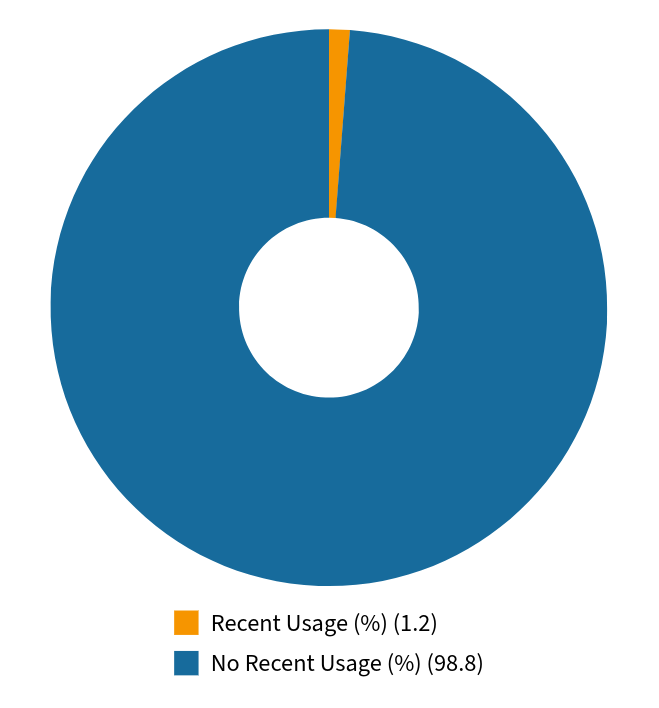
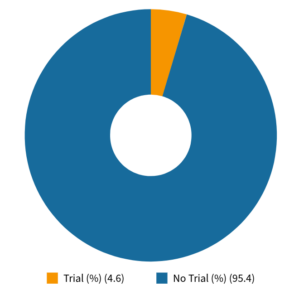
Many PATH participants – almost three quarters, in fact – were therefore unaware of MOND’s existence. Only 4.6% of participants have trialled the product, while recent (past 30 days) usage is even lower at 1.2% of participants, equivalent to 0.8% of the US adult population.
This is the first time MOND has been included in the PATH study, reflecting the fact the category is growing in recognition in the US – albeit relatively slowly in terms of the broader population.

Focusing on gender, PATH data show males are currently significantly more likely than females to have either heard of, previously used, or currently use, MOND products.
Focusing on age, use is concentrated among younger adults – particularly those between the ages 18-44.
Older age groups, meanwhile, show markedly lower awareness and usage levels – reinforcing the idea that broader adult appeal currently eludes the MOND category.
99.8% of ever nicotine pouch users are either current, or former, users of other nicotine products, strongly supporting the idea that the category either serves as a supplement or alternative for established nicotine users – and isn’t a ‘gateway’ product to nicotine use by never-users.
Additionally, MOND youth[iii] usage is very low (≈0.3%).
 The MOND category – preceded by tobacco snus – has played a huge role in helping Sweden become the first country in Europe with a daily smoking rate of less than 5% of the population, considered “smokefree” by international standards[iv].
In the US, nicotine pouches currently play more of a supportive role in helping consumers transition away from cigarette smoking.
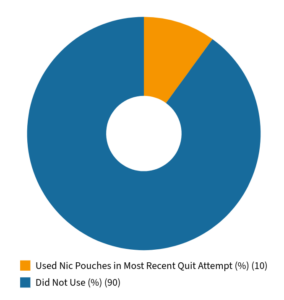
Among past‑12‑month nicotine pouch users, ~10% report using pouches to help quit smoking during their last quit attempt. Meanwhile, use for quitting is higher among former smokers (≈11.7%), but lower among current ones (≈7.4%).
It remains to be seen in future waves whether MOND – as in the case of Sweden – becomes more of an exclusively used nicotine product of choice among participants, rather than additional product (i.e. used in dual, or poly-use).
More public health and regulatory advocacy from the likes of the FDA will undoubtedly help to facilitate the former.
Greater experience with nicotine pouches is associated with participants’ having generally lower perceptions around the harm of nicotine and its role in smoking‑related disease.
Disappointing, however, the majority of PATH’s MOND user participants still consider nicotine harmful[v] – and there is a statistically significant association with the belief that nicotine itself is primarily responsible for smoking‑related disease.
This suggests there remains considerable room for improving education around nicotine myths and misconceptions for MOND to fulfil their compelling public health potential.
 MOND is currently a niche NGP category among the US adult population, though the most recent PATH data importantly suggest nicotine pouches are beginning to play a role in helping certain participant demographics in their unique journeys away from cigarette smoking.
While the broader potential tobacco harm reduction (THR) opportunity offered by MOND is clear, US growth is currently being curtailed by low awareness (and, therefore, adoption), continuing widespread misconceptions around the nicotine’s role in smoking-related disease, and regulatory barriers.
Responsible category growth – driven by manufacturers who ensure their products are developed, manufactured, and marketed to appeal to adult smokers and adult nicotine users only – is essential.
By continuing to build regulatory trust through a weight-of-evidence approach, we believe the category has an exciting potential future role to play in improving US public health.
We eagerly anticipate the release of PATH’s Wave 8 dataset later this year.
Read more about MOND in our scoping review of the academic literature here.
Edited by Rob Taylor, Senior Harm Reduction Communications Manager.
Sources
[i] A formal collaboration between the National Institutes of Health (NIH) and FDA Center for Tobacco Products (CTP), it’s designed specifically to help inform US tobacco and next generation product (NGP) regulation, and public health policy. PATH was launched in 2011.
[ii] Wave 7, released to the public and researchers in late 2024.
[iii] PATH denotes ‘youth’ as being between the ages of 12-17 years old.
[iv] https://www.folkhalsomyndigheten.se/the-public-health-agency-of-sweden/living-conditions-and-lifestyle/andtg/tobacco/use-of-tobacco-and-nicotine-products/ and https://v3-media-se.haypp.com/sehaypp/files/2025_Lakeville_-_The_race_towards_a_smoke-free_society.pdf
[v] Nicotine is an addictive substance and not risk-free, but public health experts worldwide have concluded that the highest risks from smoking are from burning tobacco and inhaling the smoke – and that nicotine is not the primary cause of smoking-related diseases. Read more here.
Follow us on LinkedIn and read more about our intentions to help create potentially healthier futures for our consumers on our corporate website. You are free to share this content with credit to Imperial Brands under a Creative Commons Attribution-NoDerivatives 4.0 International (CC BY-ND 4.0) license.