 Matt Stevenson, Scientific Substantiation Senior Manager, discusses the evidence to-date
Cigarette smoke and vape aerosol are fundamentally different, and this needs to be considered when attempting to compare the two.
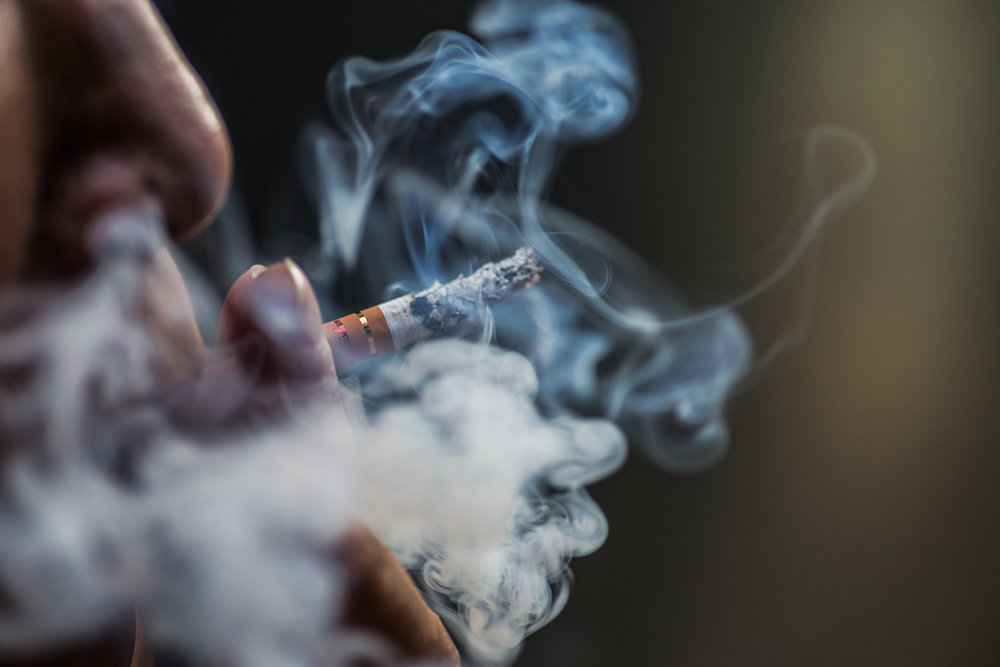
Cigarette smoke is the product of tobacco combustion. Burning tobacco generates over 7000 chemicals, over 70 of which are defined as harmful or potentially harmful for health by leading regulatory authorities like the US FDA[i].
By contrast, vapes don’t contain (or burn) tobacco. Their aerosol is chemically much simpler, consisting primarily of tiny liquid droplets containing propylene glycol (PG), vegetable glycerine (VG), nicotine (if present), and flavouring chemicals.
Focusing on potentially harmful chemicals, there’s up to 99% reduction in toxicants in vape aerosol compared to cigarette smoke[ii].
Another important aspect to consider is that between puffs, a cigarette will smoulder – releasing sidestream (or ‘second-hand’ smoke).
Conversely, vapes don’t smoulder; aerosol is only generated through either pressing a button or puffing on a device. The only way vape aerosol is released into the air is therefore through user exhalation, minimising impact on bystanders.
In terms of composition, vape exhalate primarily contains liquid droplets containing water, propylene glycol and glycerol. These droplets evaporate or dissipate in seconds a short distance from vapers, whereas particles generated by cigarette smoke linger in the air for up to an hour depending on the room conditions[iii].
One frequent misconception is that vape aerosol lingers like cigarette smoke. This could perhaps be because the clouds look similar; but the science firmly says otherwise.
It’s important to recognise that neither cigarette smoke nor vape aerosol are comprised of a single particle, but rather a mixture of particles – termed Particulate Matter (PM)[iv]. It’s also worth noting here that PM may stem from many different sources, either naturally occurring (e.g. dust, pollen) or man-made (e.g. soot, fly ash).
Furthermore, these particles are defined by their diameter for air quality regulatory purposes. Those with a diameter of 10 microns or less (PM10) are inhalable into the upper region of the lungs, whereas those particles of 2.5 microns or less (PM2.5) can reach deep into the lungs.
The PM generated from cigarette smoke is a complex mixture of both liquid droplets and solid carbon-based particles; whereas vape particles are liquid droplets of water, propylene glycol, and glycerol.

To summarise, particles – and PM – need to be robustly chemically characterised to fully understand any potential risks that may arise from their presence.
Impact on indoor air quality (IAQ) is an important public health consideration for inhaled next generation products (NGP). As such, a wealth of data exists around vape (and heated tobacco) products in this area of scientific research.
Imperial Brands’ internal studies[v] have demonstrated that vaping indoors doesn’t release chemicals or toxins into the air at levels that would pose air quality issue to bystanders when compared to established IAQ regulations and guidelines.
Focusing on vaping for instance, relative to cigarette smoke we observed marked reductions in toxicant levels within a room’s air.
Of course, there are limitations to any kinds of testing, and IAQ is no exception. One issue is the lack of official standardised testing procedures. This means different research groups often use different methods and may sometimes therefore also draw differing conclusions.
For example, some studies have used test rooms with controlled environmental conditions, to limit the impact of external influences on indoor air quality. However, this approach may not always fully reflect real-world uses or exposures.
Conversely, actual real-world studies can potentially suffer from a lack of controlled conditions (e.g. weather conditions, number of participants present; any fragrances participants may be using).
This can also skew results and impact conclusions.
Indoor vaping rules across the EU and the UK reflect a shared trend toward treating vaping similarly to smoking in public spaces, though the legal structures differ.
At the EU level, the Tobacco Products Directive (TPD) imposes product safety standards, including nicotine limits, tank and bottle size caps, and mandatory warnings – but leaves decisions about indoor use to individual member states.
As a result, policies vary widely.
For instance, countries like Italy and Spain prohibit vaping in indoor public spaces, including bars, restaurants, and public transport – with fines for violations.
Hungary enforces some of the strictest rules, banning vaping wherever smoking is banned and issuing significant financial penalties.
Portugal and others follow similar patterns, restricting vaping in enclosed public areas and child-focused spaces like schools and playgrounds.
European governments justify these restrictions on several grounds: protecting the public from exposure to aerosol, maintaining clear and enforceable public space rules, and preventing youth uptake amid rising concerns about flavoured products and disposable devices.
The UK, while retaining TPD style product rules through its post-Brexit Tobacco and Related Products Regulations framework, does not currently impose a national ban on indoor vaping.
Instead, indoor use policies are set by businesses, workplaces, and transport operators. In practice, most public houses, restaurants, and public transport services prohibit indoor vaping.
Focusing on pubs, many cite difficulties distinguishing vaping from smoking, the need to maintain customer comfort, and the desire to uphold family-friendly environments.
Although these restrictions are not mandated by law, they function as de facto indoor bans across much of public life.
From a scientific perspective, there is little justification for the inclusion of NGP like vapes in either existing, or future, smoke-free regulations.
As demonstrated above, their aerosols are simply not comparable to cigarette smoke in a chemical sense.
It’s therefore unfortunate there are so many misconceptions around this area, which we suspect are informing many current regulatory approaches.

In fact, vape aerosols are chemically even simpler than everyday household items like air fresheners and scented candles – both of which produce many harmful chemicals, including volatile organic compounds, nanoparticles, and formaldehyde[vi].
Imperial Brands supports evidence-based, data driven, proportionate regulation.
The weight-of-evidence around IAQ does not suggest vape aerosol poses a risk to bystanders, so mandating wide-ranging indoor use bans – particularly in adult environments – is currently not scientifically substantiated.
We also think individual establishments and business owners should be educated around the significant differences between cigarette smoke and vape/heated tobacco aerosol – and given the discretion to decide if use is permitted in enclosed places, depending on the purpose and nature of their premises.
Meanwhile, any workplace-specific nicotine policies should mindfully balance the needs of current adult smokers seeking to transition to alternative, potentially harm reduced nicotine products like vapes.
We therefore strongly believe adult NGP consumers should be able to use nicotine products both indoors and outdoors, provided they demonstrate consideration and respect for others around them.
Crucially, adults who have switched to NGP should not be forced into ‘smoking areas’ in workplaces or outdoors, as this contradicts previous efforts to prevent the normalisation of smoking and may, in fact, inadvertently facilitate smoking relapse.
This would greatly weaken the potential of NGP like vapes and heated tobacco to contribute to positive public health outcomes.
Edited by Rob Taylor, Senior Harm Reduction Communications Manager.
Sources
[i] https://www.fda.gov/tobacco-products/products-ingredients-components/harmful-and-potentially-harmful-constituents-hphcs
[ii] Rudd K, Stevenson M, Wieczorek R, Pani J, Trelles-Sticken E, Dethloff O, Czekala L, Simms L, Buchanan F, O’Connell G, and Walele T. Chemical Composition and In Vitro Toxicity Profile of a Pod-Based E-Cigarette Aerosol Compared to Cigarette Smoke, Applied In Vitro Toxicology. Mar 2020.11-41.
[iii] https://www.mdpi.com/1660-4601/12/5/4889
[iv] There are numerous sources of PM, created through combustion (e.g. smoking, driving petrol or diesel cars, forest fires), industrial processes (e.g. factory or powerplant emissions), and natural sources (e.g. pollen, dust).
[v] https://www.mdpi.com/1660-4601/12/1/282; https://www.eurekalert.org/news-releases/590927
[vi] https://www.news-medical.net/life-sciences/Indoor-Air-Pollution-from-Scented-Products-Mechanisms-and-Risks.aspx
Follow us on LinkedIn and read more about our intentions to help create potentially healthier futures for our consumers on our corporate website. You are free to share this content with credit to Imperial Brands under a Creative Commons Attribution-NoDerivatives 4.0 International (CC BY-ND 4.0) license.