Real-world evidence is demonstrating tobacco harm reduction in action, so why do many public health bodies and regulators remain sceptical? Joe Thompson, Group Science & Regulatory Affairs Director, builds on his panel contribution at the World Nicotine Congress to examine the arguments.
 As an organisation transforming through harm reduction, Imperial Brands approaches next generation products (NGP) with humility and a clear sense of responsibility.

We’re a challenger in the NGP space, guided by consumer choice and the belief that adult smokers deserve access to scientifically substantiated, potentially harm reduced alternatives to cigarettes.
That focus is why we invest so heavily in consumer insights, science, and innovation. Our research ensures our products are compliant, while also helping to build the compelling evidence base demonstrating their tobacco harm reduction (THR) potential compared to cigarettes.
Increasingly, it’s real-world data – not just laboratory and clinical testing – that’s complementing the existing evidence base and helping fill critical gaps in understanding how NGP are used by consumers, and the impact they have on smoking behaviour.
Why real-world evidence matters
Traditional emissions testing, toxicology, and clinical studies remain essential.
However, as consumer behaviour, product innovation, and the wider harm reduction debate evolve rapidly, these approaches alone cannot answer every question.
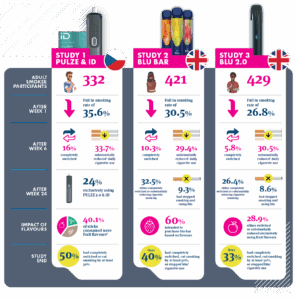
Our heated tobacco and vape-focused Actual Use Studies (AUS) are excellent examples of novel, impactful science demonstrating close-to-real-world THR in action.
These longitudinal, observational studies track real adult smokers using real NGP in their daily lives, providing a close-to-real-world picture of how individuals who smoke use our products to help transition away from cigarettes.
The results have been striking. In our blu studies:
Our study data compare favourably with long-term abstinence rates for traditional nicotine replacement therapies – though it’s important to note our NGP aren’t licensed smoking cessation products or marketed as such.
The elephants in the room
Despite mounting evidence, tobacco harm reduction remains divisive – with four persistent barriers:
These concerns are understandable – but they are also often overstated or misdirected.
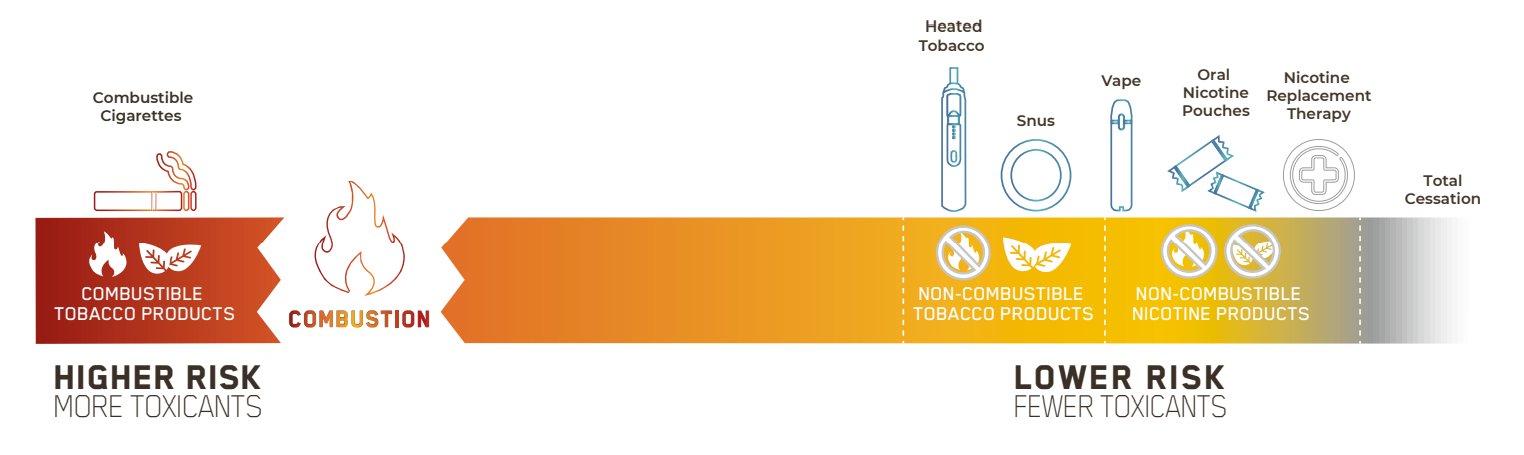
Take nicotine for example. It’s not a carcinogen, and it’s not the cause of smoking related disease – yet this myth continues to endure and hinder public health progress. Meanwhile, the precautionary principle is frequently applied in ways that ignore the relative risk scale and the real-world benefits already being observed.
Or consider youth. In-market data consistently show that the off-ramp from cigarettes to NGP among adult smokers is significantly larger than any on-ramp among never smokers, including youth[i].
While we agree it’s vital to safeguard vulnerable populations, fears around NGP as a ‘gateway’ to cigarette smoking lack credence in terms of scientific data, and therefore banning NGP on this basis would be a potential public health own goal.
Real-world evidence is all around us
The most compelling real-world evidence comes not from studies, but from nations that have embraced harm reduction strategies and are beginning to generate meaningful data.
These outcomes contrast sharply with countries like Australia that rely solely on abstinence-focused measures[v]. These nations are now seeing plateaued impact and even surges in illicit NGP, which are often an unintended consequence of prohibition-style approaches.
A call for data-driven regulation
NGP are not risk-free, nor are they a panacea. But dismissing them, or regulating them as harshly as cigarettes, ignores the weight of scientific and real-world evidence. It also risks pushing former smokers back to cigarettes, or into illicit markets.
With major regulatory milestones approaching – including the latest revision of the European Union Tobacco Product Directive – it’s essential that policymakers recognise the continuum of risk and regulate accordingly. To ignore scientific data in favour of subjective opinions or ideologies is potentially extremely damaging to future public health.
Our ESG commitment
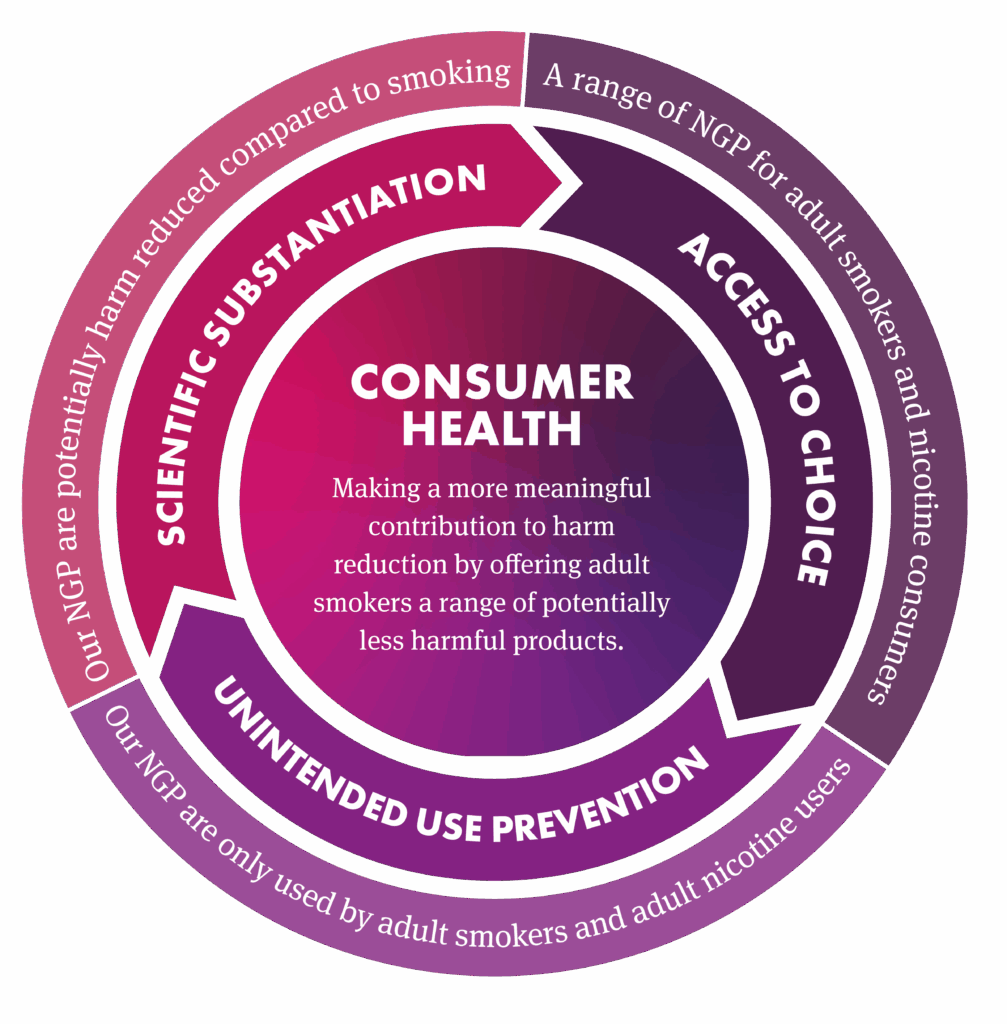
Imperial Brands is committed to building trust through responsible innovation, transparent science, and protecting unintended audiences. Our Environmental, Social, and Governance (ESG)-driven approach to consumer health is built on three pillars: access to choice, scientific substantiation, and unintended use prevention.
In other words, we’re proud to be a responsible manufacturer and believe our consumers can feel confident whenever they choose an NGP from Imperial Brands.
THR is not an industry myth; real-world evidence is not a slogan. There is a growing body of data showing that harm reduction works – in studies, in markets, and in the lives of millions of adult smokers across the world.
The challenge now working with regulators and public health bodies to ensure data, not ideology, drives pragmatic decision-making and that legislation complements reality to drive positive public health outcomes.
[1] Currently internal data; results to be published in the peer-review academic literature in due course.
[i] UK ref: NHS 2024. “In 2023, 11% (confidence interval 10-13%) of 11-15 year old pupils had ever smoked which is the lowest level ever recorded by this survey. ” “In 2023, 3% (confidence interval 3-4%) of pupils were classified as current smokers which is the same as in 2021. ”
US ref: NYTS data. “Cigarette smoking reached the lowest level ever recorded by the survey, with only 1.4% of students reporting current use in 2024.”
French ref: OFDT, 2025. Observatoire français des drogues et des tendances addictives. (2025). Drogues et addictions, chiffres clés 2025 [Key data on drugs and addictions 2025]. OFDT.
Beard et al., (2022) “Association of quarterly prevalence of e-cigarette use with ever regular smoking among young adults in England: a time-series analysis between 2007 and 2018.” [link] Reported no association between increased vape use by adolescents and young adults in England and changes in smoking prevalence.
Fearon et al., (2023), “Curiosity and intentions to use myblu e-cigarettes and an examination of the ‘gateway’ theory: Data from cross-sectional nationally representative surveys” Funded by IMB. [link] Concluded: “There was minimal evidence to suggest the existence of a ‘gateway’ effect to established cigarette smoking among never-smoking myblu users.”
Hajat et al., (2022) “Analysis of common methodological flaws in the highest cited e-cigarette epidemiology research.” [link] This commentary reported that many studies claiming a ‘gateway’ effect from vaping to smoking fail to properly account for confounding factors.
Sun and Hall., (2022) “Using survey data to test the hypothesis that e-cigarettes are a gateway to cigarette smoking in youth.” [link]. Reported no association between increased vape use by adolescents and young adults in England and changes in smoking prevalence.
Wamba et al., (2023) “Impact of e-cigarette experimentation and use on smoking behaviour among adolescents aged 15-16 years in the Loire department, France.” [link] Reported little evidence of a ‘gateway effect’.
[ii] https://v3-media-se.haypp.com/sehaypp/files/2025_Lakeville_-_The_race_towards_a_smoke-free_society.pdf
[iii] https://pubmed.ncbi.nlm.nih.gov/41191291/
[iv] Ibid.
[v] Ibid.
Follow us on LinkedIn and read more about our intentions to help create potentially healthier futures for our consumers on our corporate website. You are free to share this content with credit to Imperial Brands under a Creative Commons Attribution-NoDerivatives 4.0 International (CC BY-ND 4.0) license.